Solution for injection
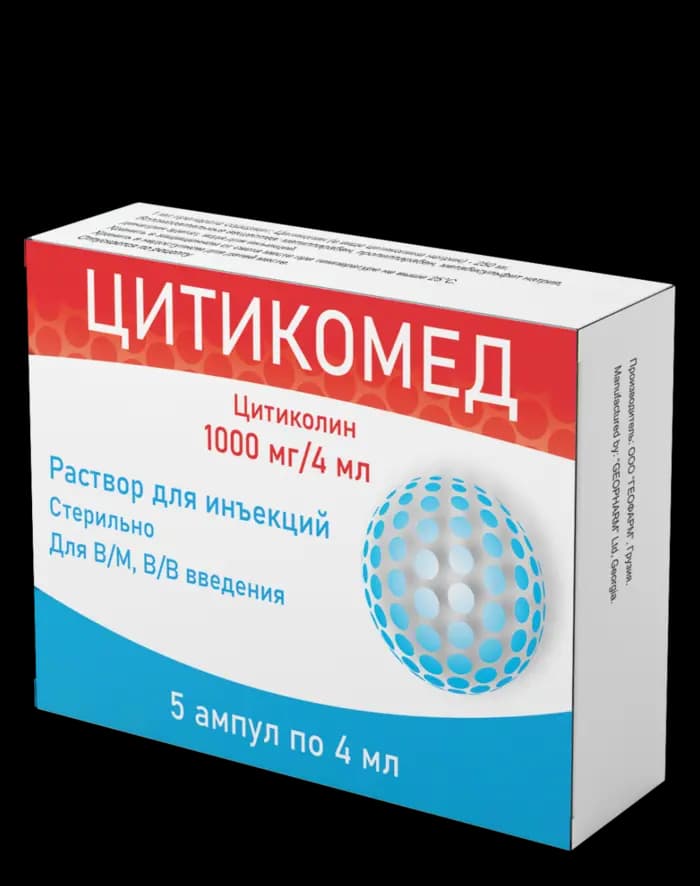
Citicomed
- Acute phase of ischemic stroke
- Recovery period after ischemic and hemorrhagic stroke
- Traumatic brain injury, acute and recovery period
Medicine
Properties and indications
- 01
Acute phase of ischemic stroke
- 02
Recovery period after ischemic and hemorrhagic stroke
- 03
Traumatic brain injury, acute and recovery period
- 04
Cognitive and behavioral disorders in degenerative and vascular diseases of the brain

Brief description
CITICOLINE 1000 mg/4 ml
5 ampoules of 4 ml
Restores the integrity of neurons damaged by ischemia
Reduces the volume of damaged tissue during the acute phase of ischemia
Special neuroprotection in the critical minutes
Citicomed is a precursor of the main ultrastructural components of the cell membrane
Contributes to the restoration of the damaged neuronal membrane and its protection from ischemia
Contributes to the inhibition of phospholipase and prevents damage to membrane systems
Prevents the formation of excessive amounts of free radicals
Acts on apoptosis mechanisms
Prevents cell death
Improves the course of symptoms present during hypoxia: memory impairment, emotional lability, lack of initiative, difficulty performing daily activities and self-care
Does not affect respiration
Long-term use is possible
Pharmacological properties
Pharmacotherapeutic group:
Psychostimulants and nootropic agents. ATC code: N06BX06.
Pharmacodynamics:
Citicoline is a precursor of the key ultrastructural components of the cell membrane (mainly phospholipids). It stabilizes neuronal membranes, inhibits phospholipase A2, prevents excessive formation of free radicals and acts on apoptosis mechanisms, preventing cell death.
In the acute period of ischemic stroke it reduces the volume of brain tissue damage and improves cholinergic transmission. In traumatic brain injury it accelerates recovery and shortens the duration of post-traumatic coma. In chronic cerebral hypoxia it is effective in treating cognitive disorders: memory impairment, lack of initiative, difficulties in daily activities and self-care.
Pharmacokinetics:
Citicoline is well absorbed. Only 15% of the administered dose is excreted from the body: less than 3% by the kidneys and about 12% with exhaled CO2.
Contraindications
Hypersensitivity to the components of the drug.
Pronounced vagotonia (predominance of the parasympathetic tone of the autonomic nervous system).
Children under 18 years of age (due to the lack of sufficient clinical data).
How to use
The drug is intended for intravenous and intramuscular administration.
The dosage and duration of treatment depend on the severity of the brain damage and are determined by the attending physician.
Acute phase of ischemic stroke:
1000 mg every 12 hours from the first day after diagnosis — as a slow intravenous injection (over 3–5 minutes, depending on the prescribed dose) or by drip infusion (40–60 drops per minute). The duration of treatment is at least 6 weeks.
3–5 days after the start of treatment (if the swallowing function is not impaired), a switch to oral forms of the drug is possible.
Ischemic and hemorrhagic stroke, recovery period after traumatic brain injury, cognitive disorders caused by degenerative and vascular diseases of the brain:
500-2000 mg per day, intramuscularly or intravenously.
Acute or recurrent intracranial hemorrhages:
Intravenously, slowly (30 drops per minute); the daily dose should not exceed 1000 mg.
Parkinsonism:
500 mg once a day intravenously, for 3–4 weeks, in combination with anticholinergic drugs.
After the maximum therapeutic effect is achieved, treatment is continued with anticholinergic drugs only.
Composition
1 ml of the preparation contains:
- Citicoline (as citicoline sodium) – 250 mg
- Excipients: methylparaben, propylparaben, sodium metabisulfite, disodium edetate, water for injection
Side effects
Severe headache, vertigo, hallucinations.
Arterial hypotension, tachycardia, shortness of breath.
Nausea, vomiting, diarrhea; chills; injection-site changes.
Allergic reactions, up to anaphylactic shock.
Additional information
Special warnings:
In acute intracranial hemorrhage the rate of intravenous drip administration must not exceed 30 drops per minute.
During pregnancy, use only when the expected benefit outweighs the potential risk.
If the drug is prescribed during lactation, breastfeeding should be discontinued, since there are no data on the excretion of citicoline in breast milk.
Citicoline enhances the effects of levodopa. It should not be used simultaneously with medicines containing meclofenoxate.
Storage conditions:
At a temperature not exceeding 25 °C, protected from light and out of the reach of children.
Manufacturer:
GEOPHARM LLC, Georgia.
Catalogue